
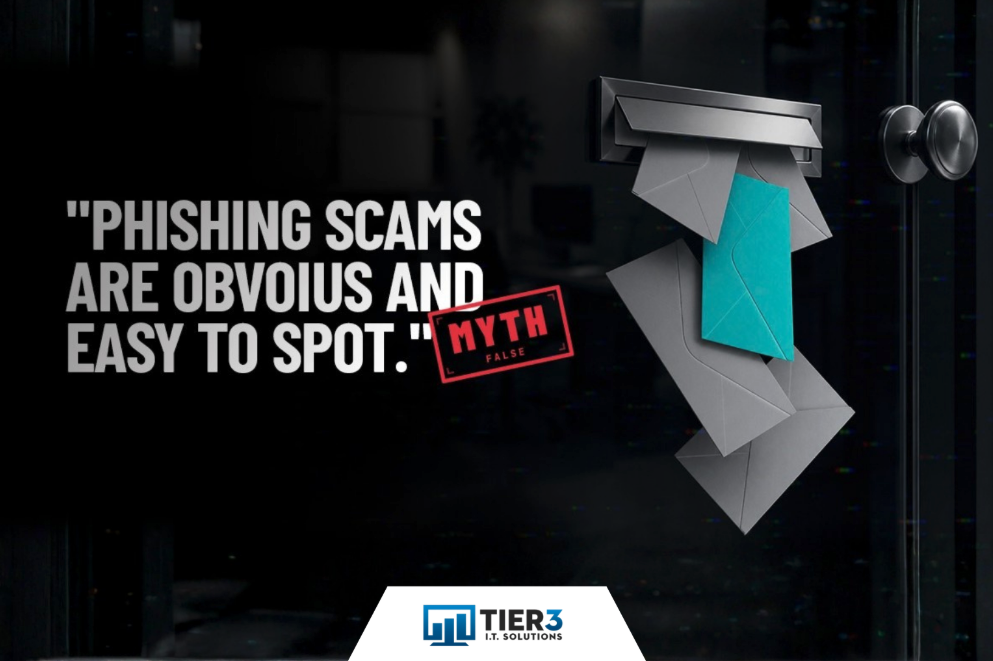
Cybercriminals no longer send the sloppy emails you expect. They craft messages that mimic your trusted partners, using AI to sound exactly like someone you know. Recognizing these threats is key to protecting your data and finances. Let’s explore how phishing scams work and what you can do to stop them before they cause damage.
The Reality of Modern Phishing Attacks
Picture this: you’re reviewing your inbox when you see an email from your bank. The logo looks right, the formatting is perfect, and the tone sounds professional. You click the link, enter your credentials, and within minutes, attackers have access to your accounts.
This scenario plays out in businesses across Edmonton, Calgary, Leduc and Grande Prairie every single day. As a trusted IT solutions provider, we see firsthand how these attacks evolve and become more sophisticated. The old assumption that phishing emails are easy to spot because of poor grammar or suspicious formatting no longer holds true.
Cybercriminals now leverage artificial intelligence to study writing styles, research your business relationships, and create messages that look and sound authentic. Some even use AI-generated voices to impersonate executives or trusted colleagues. When your team receives a message that appears to come from someone they know, asking for a wire transfer or password reset, the risk of falling victim increases dramatically.

Types of Phishing Attacks Targeting Your Business
Understanding the different forms these attacks take is your first line of defense. Your team needs to recognize these threats before they compromise your operations.
Email Phishing
This remains the most common method. Attackers send messages that appear to come from legitimate companies, vendors, or financial institutions. These emails often contain links to fake websites designed to steal login credentials or attachments that install malware on your systems.
AI-Powered Phishing
Artificial intelligence has changed the game for cybercriminals. They can now analyze publicly available information about your business, study communication patterns, and generate highly convincing messages.
Spear Phishing
Unlike broad email campaigns, spear phishing targets specific individuals within your organization. Attackers research their victims thoroughly, using details about job roles, business relationships, and recent activities to craft personalized messages. This makes them particularly dangerous for executives and finance team members.
Business Email Compromise
In these attacks, criminals impersonate executives, employees, or vendors to request payments, change banking details, or obtain sensitive information. We’ve seen business email compromise scams cost companies thousands of dollars in fraudulent wire transfers. For businesses looking for IT consulting in Edmonton, the right support can help prevent costly mistakes and strengthen cybersecurity.
Smishing and Vishing
Phishing isn’t limited to email. Text message phishing (smishing) and voice call phishing (vishing) are growing threats. With voice cloning technology, attackers can now replicate the voice of someone you know and trust. When you receive an urgent call from what sounds like your CEO requesting immediate action, skepticism becomes essential.
QR Code Phishing
Also called quishing, this tactic uses malicious QR codes in emails, documents, invoices, or even physical posters. When scanned, these codes direct victims to fake websites. Because many security tools can’t inspect QR codes effectively, this method bypasses traditional email filters.
Practical Steps to Protect Your Business
At Tier 3 IT, we’ve helped countless businesses strengthen their defenses against phishing. The key is combining technology, training, and smart processes. Here’s what works:
Employee Training: Your team needs regular education on current phishing tactics. Training should cover AI-generated content, voice cloning, and other emerging threats. Make sure everyone knows that even professional-looking messages require verification.
Advanced Email Security: Deploy email security tools that detect impersonation attempts, malicious links, and suspicious attachments. A managed service provider can implement these solutions and monitor them continuously.
Multi-Factor Authentication: Require multi-factor authentication across all business systems. Even if credentials are stolen, this extra layer keeps attackers out. Where possible, use passkeys or security keys for added protection.
Verification Procedures: Create a policy requiring verification of any urgent requests involving money, passwords, or sensitive data. If someone emails asking for a wire transfer, call them directly using a known phone number to confirm.
Limit Public Information: Review what information about your employees and business is publicly available online. Attackers use this data to personalize their scams. Work with the right IT Solutions partner to minimize your digital footprint.
Regular Updates: Keep all software, systems, and computer security tools current. Many phishing attacks exploit known vulnerabilities that patches would have prevented.
Easy Reporting: Make it simple for employees to report suspicious messages. The sooner something is reported, the sooner your IT helpdesk in Edmonton can investigate and help stop the same attack from reaching others.
Partner with Experts Who Understand Your Business
Phishing attacks threaten more than your technology. They put your finances, reputation, and customer trust at risk. One successful attack can disrupt operations for days and cost thousands in recovery expenses.
At Tier 3 IT, we provide managed IT services to businesses across Edmonton, Calgary, Leduc and Grande Prairie. We understand that you need solutions that protect your business without creating complexity. Our approach focuses on your business goals first, then applies the right technology to achieve them.
We offer comprehensive cybersecurity solutions that Edmonton businesses need, including email security, employee training, security assessments, and monitoring. Our team acts as your trusted advisor, helping you build defenses that match your risk profile and budget.
Whether you need an outsourced IT services partner in Edmonton or want to enhance your existing tech support infrastructure, we’re here to help. As a business advisor specializing in technology, we translate complex security concepts into practical actions you can implement right away.
Don’t wait for a phishing attack to expose vulnerabilities in your defenses. Book a meeting with our team to discuss how we can strengthen your security posture and protect what you’ve built. We’ll assess your current situation, identify gaps, and create a plan that fits your business.
Protect your employees, your finances, and your reputation. Let’s work together to keep your business safe from phishing threats.
For more guidance on recognizing and avoiding phishing attacks, visit the Canadian Centre for Cyber Security’s resource page.
Frequently Asked Questions
What is the most common type of phishing attack?
Email phishing remains the most common method, where attackers send messages that appear to come from legitimate companies or contacts. These emails typically contain malicious links or attachments designed to steal information or install malware. With AI tools, these emails now look more professional and convincing than ever before.
How can I tell if an email is a phishing attempt?
Look for urgent requests involving money or passwords, slight variations in sender email addresses, and unexpected attachments or links. Even if the message looks legitimate, verify any unusual requests through a separate communication channel. Modern phishing emails may have perfect grammar and authentic-looking branding, so verification is essential.
What should I do if I clicked on a phishing link?
Immediately disconnect from your network and contact your IT support team. Change passwords for any accounts that may have been compromised, and enable multi-factor authentication if you haven’t already. Your IT company should scan your device for malware and monitor your accounts for suspicious activity.
Can antivirus software protect against phishing?
Antivirus software provides some protection by detecting malicious attachments and known phishing sites, but it’s not foolproof. A comprehensive approach includes email security tools, employee training, multi-factor authentication, and strong verification procedures. Work with a managed service provider to layer multiple defenses.
Why are phishing attacks getting harder to detect?
Cybercriminals now use artificial intelligence to create highly personalized, professional messages that mimic real business communications. They research their targets using publicly available information and can even clone voices to impersonate trusted individuals. This sophistication makes human awareness and verification procedures more important than ever.